
IWHEC 2024 and the Launch of the Book Human-Engaged Computing
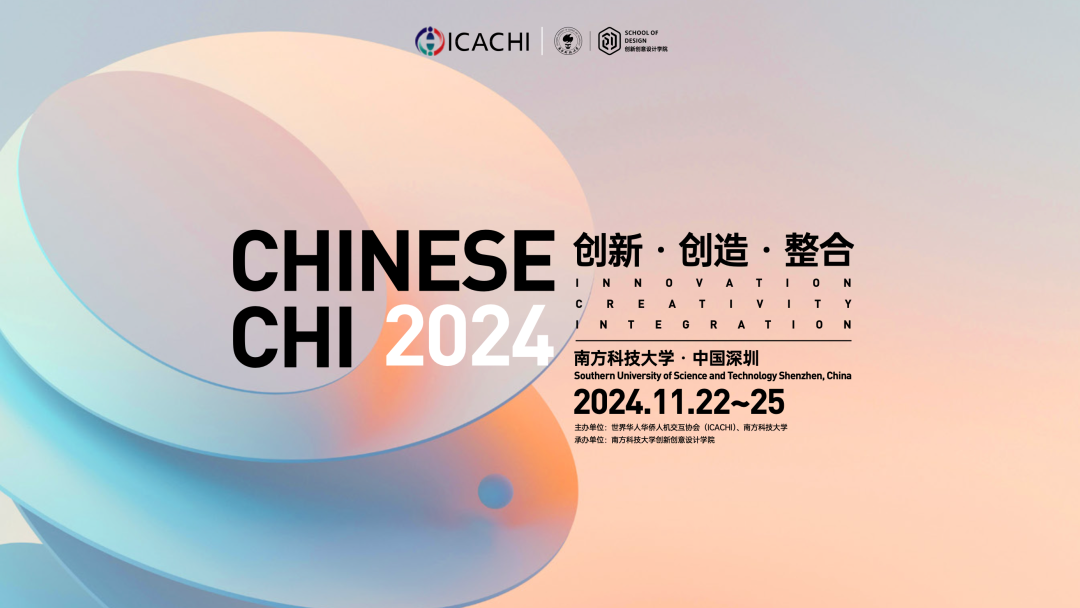
IWHEC 2024
International Workshop on Human-Engaged Computing
About IWHEC
The International Workshop on Human-Engaged Computing (International Workshop on Human-Engaged Computing, IWHEC) rethinks the relationship between people and computers. By inviting experts in human–computer interaction, neuroscience, humanities, philosophy, social sciences, design, computer science, and AI to share their insights, we aim to create a platform for collective intelligence and global intellectual exchange.
This workshop and the launch of Human-Engaged Computing are part of Chinese CHI 2024 and will be held in a hybrid format. You may attend in person at Southern University of Science and Technology or watch the livestream.
Workshop Theme
Over the past few years, you may have experienced both ICT's support for people and its potential negative effects, alongside milestone advances in AI. What do these developments mean for us? Drawing on our disciplinary knowledge and thorough discussion of human–technology relationships, we hope to identify insights, common ground, and practical directions for future research and technological development.
Program
Time: November 22, 2024, 13:00–17:40 Beijing Time
Venue: 11th Floor, Building C1, Nanshan Zhiyuan, Shenzhen, SUSTech School of Design Auditorium
Language: Chinese
13:00 - 13:05
Opening Introduction
Xiangshi Ren(Kochi University of Technology)
13:05 - 13:10
Introduction to ICACHI
Zhiyong Fu (ICACHI President, Tsinghua University)
13:10 - 13:30
Authors of Human-Engaged Computing Share Their Writing Experiences and Book Highlights
Moderator: Xiangshi Ren (Kochi University of Technology)
Zhiyong Fu(Tsinghua University)
Jianmin Wang(Tongji University)
Huatong Sun (University of Washington)
Chen Wang(Kochi University of Technology)
13:30 - 14:00
Sharing Endorsements and Forewords
Moderator: Chen Wang (Kochi University of Technology)
Guozhong Dai (Institute of Software, Chinese Academy of Sciences)
Chiyang Liao (Musashino Art University)
Yingqing Xu (Tsinghua University)
Jun Hu (Eindhoven University of Technology)
Di Liu (Kyorin University)
Zixue Cheng (University of Aizu)
Jin Yu (Guangzhou University of Chinese Medicine)
Peng Cheng(PauseAble ApS)
14:00 - 14:15
Coffee Break
14:15 - 15:45
Panel: Eastern and Western Values and Next-Generation Interaction Technologies, Part I
Moderators: Xiangshi Ren (Kochi University of Technology) and Chen Wang (Kochi University of Technology)
Chiyang Liao (Musashino Art University)
Jun Hu (Eindhoven University of Technology)
Di Liu (Kyorin University)
Jin Yu (Guangzhou University of Chinese Medicine)
Peng Cheng(PauseAble ApS)
Zhiyong Fu(Tsinghua University)
Huatong Sun (University of Washington)
15:45 - 16:00
Coffee Break
16:00 - 17:30
Panel: Eastern and Western Values and Next-Generation Interaction Technologies, Part II
Moderators: Xiangshi Ren (Kochi University of Technology) and Chen Wang (Kochi University of Technology)
Guozhong Dai (Institute of Software, Chinese Academy of Sciences)
Zixue Cheng (University of Aizu)
Yingqing Xu (Tsinghua University)
Jianmin Wang(Tongji University)
Yingying She(Xiamen University)
Shengdong Zhao(City University of Hong Kong)
Wei Li (Huawei)
17:30 - 17:40
Closing Remarks
Guozhong Dai (Institute of Software, Chinese Academy of Sciences)
17:40 -
Group Photo
Registration Link

https://rcnhlcjvc67z.feishu.cn/share/base/form/shrcnSqxs6zrhCyiAj5qXGEnoMh
Speakers and Moderators
Speakers
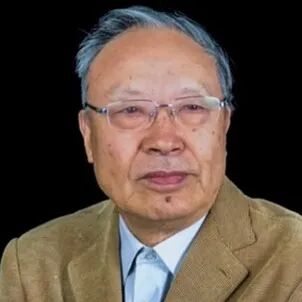
Guozhong Dai
Chinese Academy of Sciences
Formerly chief engineer at Institute of Software, Chinese Academy of Sciences, he is now chief researcher and doctoral supervisor at the Laboratory of human–computer interaction Technology and Intelligent Information Processing. A graduate of the University of Science and Technology of China, he visited the University of Maryland's computer science department during 1982-1985. He served on the automation expert group and expert committee of China's 863 Program and advised the information division of the 973 Program. He is honorary chair of ACM SIGCHI China and honorary director of China Computer Federation's human–computer interaction committee. Researcher Guozhong Dai has led and participated in National Natural Science Foundation, National High-Tech R&D, and National Basic Research projects. His main areas are computer graphics, human–computer interaction, and software engineering. He has published over one hundred influential papers and two monographs, won four National Science and Technology Progress Awards, and received multiple Chinese Academy of Sciences and ministerial awards.

Zhiyong Fu
Tsinghua University
Zhiyong Fu is president of International Chinese Association of Computer Human Interaction, deputy head and tenured associate professor of Information Art and Design at Tsinghua University's Academy of Arts and Design, and a doctoral supervisor. He directs Tsinghua University's Art and Science Innovation Base, is deputy director of the China Innovation and Entrepreneurship Education Research Center, secretary-general of the China Industrial Design Association's Information and Interaction Design Committee, and co-founder of the Global Design Futures Network. He serves on the Ministry of Agriculture and Rural Affairs' second expert committee on Globally Important Agricultural Heritage Systems. He teaches undergraduate and graduate courses in interaction design, service design, design thinking, innovation, and entrepreneurship. His research addresses smart products and services, human-centered cities, and design futures.

Yingqing Xu
Tsinghua University Future Laboratory
Dr. Yingqing Xu of Tsinghua University is a professor at Tsinghua University's Academy of Arts and Design, director of Tsinghua University's Future Laboratory and Tsinghua University's Lifelong Learning Laboratory, and director of the Future Design Innovation Center at Tsinghua's Pearl River Delta Research Institute. He is a fellow of China Computer Federation and a senior IEEE member.

Wei Li
Huawei human–computer interaction Laboratory
Dr. Wei Li is chief scientist at Huawei's human–computer interaction Laboratory and heads its Toronto human–computer interaction Laboratory. Before joining Huawei, Wei Li was principal scientist in Autodesk Research Toronto's UI and Computational Science groups, contributing to Software Learning and Project Dreamcatcher. He earned his PhD in AI at the University of Waterloo and bachelor's degree in computer science at the University of Science and Technology of China. Wei Li holds more than 40 patents in human–computer interaction, intelligent systems, computer-aided design, and mobile computing. His honors include best paper awards and nominations at AAAI/IAAI, MobileHCI, and IDETC/CIE.

Jianmin Wang
Tongji University
Jianmin Wang is associate dean, professor, and doctoral supervisor in Tongji University's College of Arts and Media and works in the Intelligent Vehicle Interaction Design Laboratory. He serves on the Ministry of Education's Animation and Digital Media Teaching Steering Committee (2013-2022), is deputy secretary-general and executive council member of the Chinese Association of Higher Education's Design Education Committee, and is a fellow of the Royal Society of Arts. He is a senior member of China Computer Federation and executive member of its human–computer interaction committee; deputy director of the China Society of Image and Graphics' Digital Art Committee; deputy director for arts of the humanities committee of the national virtual simulation teaching innovation alliance; and chair of the China Video Industry Association's Intelligent Interaction Technology Committee.

Huatong Sun
University of Washington
Huatong Sun is a professor of digital media design at the University of Washington, a core member of its AI and Culture Institute, a director of International Chinese Association of Computer Human Interaction (ICACHI), and a Theodore von Karman Fellow at RWTH Aachen University. Her books Cross-Cultural Technology Design (2012) and Global Social Media Design (2020) received multiple National Council of Teachers of English book awards. Her innovative teaching in design empowerment earned the Society for Technical Communication's distinguished teaching award and the Association for Business Communication's diversity practice award. Her research addresses cross-cultural design, global user experience, and technology's global expansion.

Shengdong Zhao
City University of Hong Kong
Shengdong Zhao is a professor in the School of Creative Media and Department of Computer Science at City University of Hong Kong. In 2009 he founded the Synteraction research laboratory, formerly NUS-HCI, at National University of Singapore. He earned his PhD in computer science from the University of Toronto and master's degree in information management and systems from UC Berkeley. He has extensive experience developing innovative interface tools and applications and publishes regularly at CHI, ToCHI, Ubicomp/IMWUT, CSCW, UIST, and IUI. In 2017 he served as a senior adviser to Huawei's Consumer Business Group. An active HCI community member and frequent program committee member, he co-chaired papers for ACM SIGCHI in 2019 and 2020 and will co-chair papers for ACM UIST 2025. In 2017 he introduced the concept of Heads-Up Computing and has contributed key projects and publications, including a September Communications of the ACM feature exploring wearable intelligent assistants as a new interaction paradigm. His work develops interfaces that improve everyday life. Learn more at www.shengdongzhao.com.

Jun Hu
Eindhoven University of Technology
Dr. Jun Hu is an associate professor and doctoral supervisor in Social Computing Design at Eindhoven University of Technology (TU/e), head of human–computer interaction's doctoral program in design engineering, and distinguished professor and doctoral supervisor at Zhejiang University and Jiangnan University. He chairs IFIP's Entertainment Computing working group on Aesthetics and Empowerment (WG14.7). He has chaired the Sino-European Design Promotion Association since 2019, served on International Chinese Association of Computer Human Interaction's (ICACHI) board since 2020, and been vice president since 2024.

Chiyang Liao
Musashino Art University
Professor at Musashino Art University, Japan, with a PhD in literature, specializing in East Asian social history and culture. His Chinese- and Japanese-language books include Crossing Borders: International Students and New Chinese Migrants; Surging Tides: Reform, Opening-Up, and Study in Japan; Between Market, Society, and State: Chinese Merchants and Asian Regional Networks in East Asian Treaty Ports; Nagasaki's Chinese Community and the Formation of East Asian Trade Networks; The Thought and Practice of Qigong; and Laozi and Qigong: Chinese Culture as Mind–Body Practice.

Zixue Cheng
University of Aizu
Dr. Zixue Cheng is professor emeritus at the University of Aizu. His interests include computer networks, distributed algorithms, ubiquitous computing, IoT, and wearable computing. He was vice president and graduate school dean from 2014 to 2020 and director of the Center for Globalization from 2015 to 2020. He promoted education incorporating Aizu's cultural heritage and led university-wide national initiatives including the Aizu IT Nisshinkan entrepreneurship workshops, the International IT Nisshinkan Asian Human Resources Project, and the Top Global University Project, developing innovative ICT talent for global engagement. He currently develops HEC-based synergistic communication protocols and AI agents.

Di Liu
Kyorin University
PhD in Law, Graduate School of Law, Waseda University; professor and doctoral supervisor in the Faculty and Graduate School of Policy Studies at Kyorin University, Japan. Previous roles include journalist and editor at the People's Daily international department, Japan correspondent for Hong Kong's Ta Kung Pao, Nikkei columnist, founding editor-in-chief of a Sino-Japanese medical exchange journal, and Chinese-language think tank researcher. His monographs include An Overview of Modern Western Media Law, Federalist Thought in Modern China, Yukio Hatoyama: The Dawn of Democratic Party Politics in Japan, and Three Flavors of Japan. Edited works include An Introduction to Contemporary Chinese Politics and Sino-Japanese Shared Knowledge: Collected Papers.

Jin Yu
Guangzhou University of Chinese Medicine
PhD in Medicine; professor and doctoral supervisor at Guangzhou University of Chinese Medicine; director of the Jin's Three-Needle Research Center in its School of Acupuncture and Rehabilitation; vice president of the World Federation of Chinese Medicine Societies' Music Therapy Committee; vice chair of the Chinese Musicians Association's Music Therapy Society; chair of the Guangdong Association of Chinese Medicine's Music Therapy Committee; and visiting researcher at Chinese Academy of Sciences's Shenzhen Institutes of Advanced Technology.

Peng Cheng
PauseAble ApS
Founder of the Danish mental health company PauseAble, inventor of interactive meditation, and creator of PAUSE. PAUSE, the only product on the market based on interactive meditation, has more than two million downloads and has appeared on annual best-app lists from TIME and Apple's App Store. Before entrepreneurship, he was a senior user experience design specialist at Nokia Denmark.

Yingying She
Xiamen University
Dr. Yingying She serves on the China Film Association's Film Education and Development Committee and is recognized as high-level overseas-educated talent in Xiamen. As first or corresponding author, she has published more than 30 papers and, as first inventor, holds seven invention patents and over 20 software copyrights. Her projects have won more than 30 leading national and provincial awards. Her Palm Puppet Robot New Media Interactive Performance and Promotion project was selected by the Ministry of Culture and Tourism as a representative 2020 culture and tourism informatization case. She has led or participated in projects supported by the National Natural Science Foundation, National Arts Fund, major National Social Science projects, Ministry of Science and Technology key R&D programs, Ministry of Education, State Key Laboratory of Virtual Reality Technology and Systems, Fujian science and technology authorities, and Xiamen Science and Technology Bureau.
Moderators
Xiangshi Ren
Kochi University of Technology
Xiangshi Ren is a tenured professor in Kochi University of Technology's School of Information and director of its Human-Engaged Computing Institute (Center for Human-Engaged Computing). He is a foreign member of the Engineering Academy of Japan and a fellow of the Information Processing Society of Japan, and founding president and lifetime honorary president of International Chinese Association of Computer Human Interaction. He serves on the editorial boards of Science & Technology Review and She Ji. Over nearly thirty years of fundamental human–computer interaction research and education, he has trained doctoral and postdoctoral researchers, including international scholars from more than ten countries.

Chen Wang
Kochi University of Technology
Chen Wang holds a PhD in human–computer interaction from Kochi University of Technology in Japan, supervised by Professor Xiangshi Ren, and chairs International Chinese Association of Computer Human Interaction's Young Scholars Committee. His current work with Professor Xiangshi Ren explores the theory and practice of Human-Engaged Computing (Human-Engaged Computing, HEC).