
Chinese CHI 2023: Program Overview and Keynotes
Program at a Glance & Keynotes
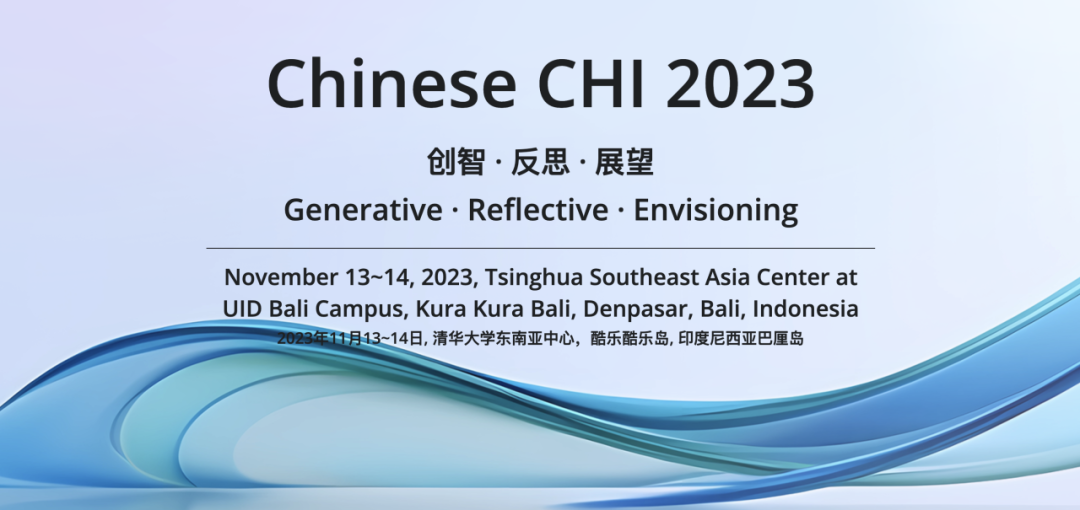
With the theme Generative, Reflective, and Envisioning, Chinese CHI 2023 will take place November 13–16, 2023, on Kura Kura Island, Bali, Indonesia.
Organized by International Chinese Association of Computer Human Interaction (ICACHI), this academic conference has become an important connection among Chinese HCI scholars, academia, and industry worldwide. Since 2012, ten editions have been held in Paris, Toronto, Seoul, Silicon Valley, Guangzhou, Montreal, Xiamen, and online. Conference papers are included in the ACM Digital Library and submitted for EI indexing.
The Eleventh International Symposium of Chinese CHI (Chinese CHI 2023) will be held from November 13–16 in Kurakura Island, Bali, Indonesia. Supported by the International Chinese Association of Computer Human Interaction (ICACHI), Chinese CHI is steered by a group of globally distributed HCI researchers, practitioners, academics, and students concerning about the development of HCI as a thriving field in the global Chinese communities.
Chinese CHI serves as a primary forum for connecting the international HCI community to the booming Chinese computing industry. The theme of Chinese CHI 2023 is Generative, Reflective, and Envisioning. As the first time we can gather globally again at Chinese CHI after the pandemic, We welcome discussions on the value, significance, and social contribution of human-computer interaction in a wide context. We plan to have all accepted papers included in the conference proceedings and published through the ACM Digital Library and EI Compendex.
Program at a Glance
Program at a Glance
11.13 / Monday
09:00-12:15
Workshop 1: New Context Versus Old Semantics—Where New Contexts Meet Ancient Grammar
Workshop 2: Enhancing Accessible Design Tools: Value Integration in the Design Process
12:15-14:00
Lunch Break
13:00-17:30
International Workshop on Human-Engaged Computing 2023
14:00-17:15
Workshop 3: Co-creating human-chatbot interaction by considering the healthcare chatbot’s social characteristics and communication modalities
17:30-20:00
Reception
11.14 / Tuesday
09:00-10:15
Opening Ceremony & Keynote
10:15-10:45
Coffee Break
10:45-12:15
Paper Section 1
12:15-14:00
Lunch Break
14:00-15:15
Paper Section 2
15:15-16:00
Coffee Break/Late-Breaking Work 1
16:00-17:15
Paper Section 3
18:30-20:30
Banquet/Art Gallery Exhibition
11.15 / Wednesday
09:00-10:30
Paper Section 4
10:30-11:00
Coffee Break/Late-Breaking Work 2
11:00-12:15
Paper Section 5
12:15-14:00
Lunch/ Buffet
14:00-15:30
Paper Section 6
15:30-16:00
Coffee Break
16:00-17:15
Keynote & Closing Ceremony
17:30-19:00
Dinner
11.16 / Thursday
All Day
One-day Tour (optional)
Conference Keynotes
Keynotes
Opening Keynote Speaker
Opening Keynote
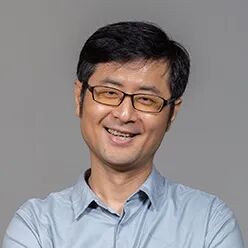
Shengdong Zhao
Associate Professor, Assistant Dean, Communications
Department of Computer Science
National University of Singapore
https://www.shengdongzhao.com/
Fostering Reflective Inquiry: A Dialogue on Value-Driven Research in HCI
"Fostering Reflective Inquiry: A Dialogue on Value-Driven Research in HCI" invites Chinese researchers, both in China and abroad, to engage in a critical dialogue about the direction and depth of HCI research. This keynote is not about providing set answers but rather about initiating a collective exploration into what constitutes truly impactful research in the diverse and global landscape of HCI. The talk aims to bridge cultural and academic perspectives, highlighting how Chinese researchers can leverage their unique insights and experiences to contribute to the field. The speaker, a fellow researcher engaged in this global dialogue, will share personal reflections and encourage an open discussion on how to cultivate research that is deeply innovative, socially relevant, and scientifically sound, regardless of geographical boundaries.
Closing Keynote Speaker
Closing Keynote

Professor
Eindhoven Artificial Intelligence Systems Institute
Eindhoven University of Technology
https://www.tue.nl/en/research/researchers/regina-bernhaupt
Digital Twins for HCI Research
Digital twins have become a buzz-word referring to the ability to have digital counterpart of physical parts of our worlds. While starting with digital models of physical objects like machines, today digital twins are real-time connected counterparts of the physical world. And beyond being real time, we see not only digital twins of objects, but digital twins of human hearts, of systems – and systems of systems. Digital twins will be a key technology when it comes to monitoring and optimizing future services, when it comes to understanding possible alternative scenarios and especially when predicting future events, like when to repair a machine, but also maybe when to repair a heart? This inspirational keynote will guide you through some examples of digital twins applications that touch everyone of us in our everyday life, our healthcare, the city we are living in. But it will also show how HCI and HCI research methods have to be adapted and re-invented to address the challenges digital twins as a technology bring to our HCI research community.