
Chinese CHI 2022 Is Now Open

Inclusion . Resilience . New Normal
Chinese CHI 2022, organized by International Chinese Association of Computer Human Interaction (ICACHI), will be held online November 5–6, 2022, hosted in Guangzhou, China. The theme is Inclusion, Resilience, and New Normal.
Listed in Speaking Order
Chinese CHI 2022 Speaker Introductions
Opening Keynotes
November 5, 09:00–12:00

Don Norman
Distinguished Professor at the University of California San Diego and founder and first director of its Design Lab. He previously served as Apple's vice president of advanced technology, a Hewlett-Packard executive, and co-founder of Nielsen Norman Group. His 20 books, including Emotional Design and The Design of Everyday Things, have been translated into 20 languages. Honors include lifetime achievement awards from ACM's human–computer interaction group and the Human Factors and Ergonomics Society's Presidential Lifetime Achievement Award.
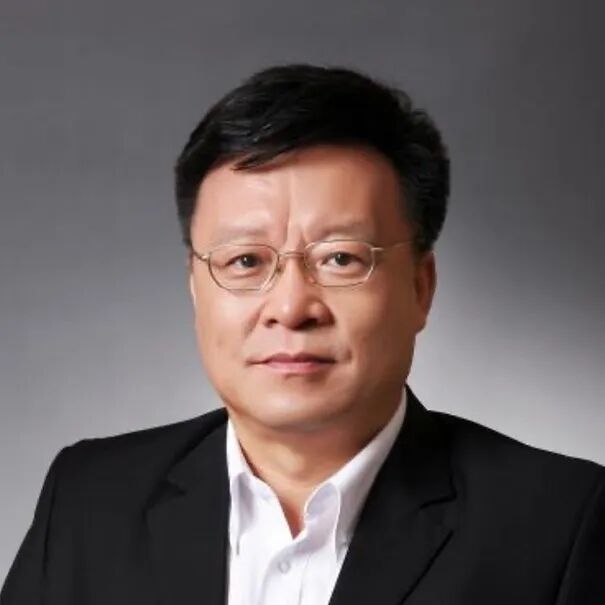
Wen Gao
Member of the Chinese Academy of Engineering, director of Peng Cheng Laboratory, Boya Chair Professor and head of the Division of Information and Engineering Sciences at Peking University, and director of the National Engineering Research Center of Visual Technology. His research covers computer vision, pattern recognition and image processing, multimedia compression, multimodal interfaces, and virtual reality. He established China's independent video coding technology and standards systems. His work on key technologies for polymorphic primitive coding and decoding of ultra-high-definition video won the field's only first-class National Technological Invention Award in 2020.

Peter Childs
Fellow of the Royal Academy of Engineering, advisory professor at the Guangdong International Advanced Design Center, School of Art and Design, Guangdong University of Technology, and professor of engineering design at Imperial College London's Dyson School of Design Engineering. He was the school's founding head from 2013 to 2019. His interests include creativity and industrial applications of creative tools. He has published over 200 papers and books including the Mechanical Design Engineering Handbook, Temperature Measurement, and Rotating Flow, and received major awards from organizations including ASME.

Yingqing Xu
Professor at the Academy of Arts and Design, Tsinghua University; director of the Future Laboratory; and executive deputy chair of the China Industrial Design Association's Information and Interaction Design Committee. His teaching and research cover information art and natural human–computer interaction experiences. He has published nearly 100 international conference and journal papers, with several research outcomes incorporated into real products.
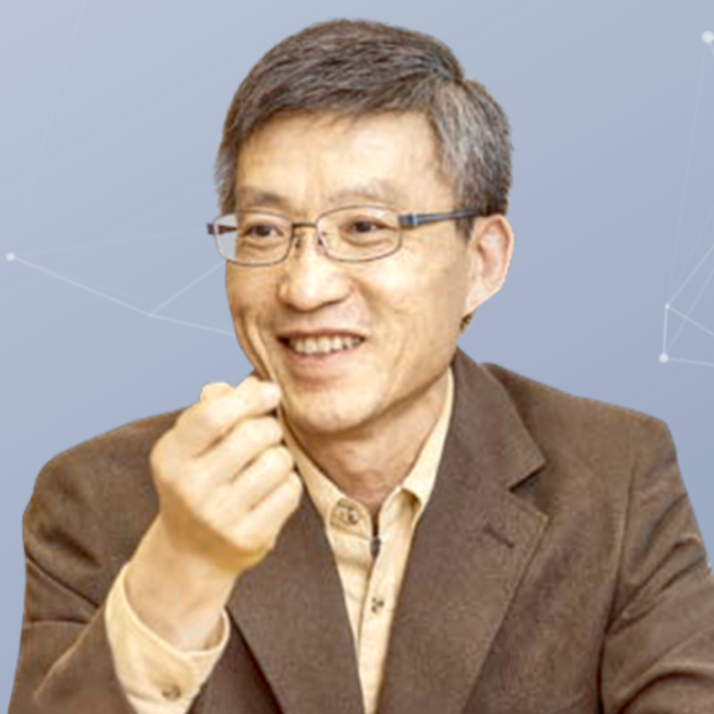
Xiangshi Ren
Member of the Engineering Academy of Japan, founding president of International Chinese Association of Computer Human Interaction, advisory professor at Guangdong University of Technology, and tenured professor in the School of Information at Kochi University of Technology, Japan. A fellow of the Information Processing Society of Japan, he was recognized in 2016 as a leading human–computer interaction figure by the international Chinese association. He originated the theory of next-generation human–computer interaction—Human-Engaged Computing. His fundamental and applied human–computer interaction research has received 30 grants, including 25 as principal investigator, two education awards, and 12 research paper and related awards.
Thematic Forum: Human-Engaged Computing
November 6, 09:00–16:10

Jie Hu
Distinguished Professor at Shanghai Jiao Tong University, chief investigator of a major National Social Science Fund project, vice president of the China Industrial Design Association, and member of CAST's National Committee. As principal investigator, he has led one major National Social Science Fund project, seven National Natural Science Foundation projects including a key project, and a National 973 Program project, among others. He has published seven books and 213 papers. His research received a first-class Shanghai Science and Technology Progress Award.

Chirag Shah
Professor at the University of Washington, also affiliated with the Paul G. Allen School of Computer Science and Engineering and Human Centered Design & Engineering. His research centers on intelligent systems, making search and recommendation intelligent, proactive, and integrated, while exploring how to make such systems fair, transparent, and ethical.

Fang Liu
Professor at Hunan University and deputy director of the Ministry of Culture and Tourism's Key Laboratory of Digital Cultural Creative Intelligent Design Technology. She has led National Key R&D Program and National Natural Science Foundation projects, published over 90 international journal and conference papers, and obtained or applied for over 20 invention patents. Her interests include cultural big data, intelligent interaction design, and data visualization.

Jacek Gwizdka
Associate professor at the University of Texas at Austin researching human–computer interaction. His projects include applying cognitive neuroscience tools to cognitive functions in human information interaction. He serves on conference and workshop organizing committees, including IIiX, ASIS&T, ACM SIGCHI, and SIGIR, and on the editorial board of Interacting with Computers.

Michelle Rogers
Associate professor at Drexel University examining how information technology in complex settings changes people's work, particularly clinical information systems' effects on healthcare practitioners' work processes, including patient safety, work design, and user-centered design.

Fan Yang
Assistant professor at the University at Albany. His interests include the psychology of communication technology, strategic communication, and advanced research methods. He studies new media's effects on decision-making, particularly information processing and attitude change, and also uses meta-analysis and social network analysis. His work has received multiple professional association awards.

Jingyan Qin
Professor, deputy dean, and head of industrial design in the School of Intelligence Science and Technology at University of Science and Technology Beijing. Recognized among the Guanghua Longteng Award's top ten outstanding young Chinese designers, she is executive director of the China Industrial Design Association's IIDC, a CCF committee member, and member of ACM and CRUCIBLE. Her record includes over 150 papers, 11 books, 15 patents, more than 20 national projects, and over 30 awards including Red Dot awards.

Max Wilson
Associate professor of human–computer interaction in the University of Nottingham's Mixed Reality Laboratory and a steering committee member for ACM CHI and CHIIR, among other roles. Supported by EPSRC and other funders, his research evaluates interfaces for information interaction, treating cognitive load and other cognitive activities as personal data for assessing technologies and work tasks.
Thematic Forum: Future Developments in Intelligent Interaction
November 6, 14:00–16:20

Shaoxu Tian
Distinguished Professor at Guangdong University of Technology and professor of design at Shenzhen University. He is deputy chair of the Ministry of Education's teaching advisory committee for animation and digital media, chair of the World Chinese Art Education Association's digital art education committee, and deputy chair of the national university computing education association's network technology and intelligent media design committee. He has led over ten research projects, published more than ten papers in authoritative Chinese and international journals, and published over 20 design and art works.

Dingbang Luh
Chief professor in the School of Art and Design, Guangdong University of Technology. Previous positions include dean of the College of Creative Design at Asia University in Taiwan, head of industrial design and director of the Institute of Creative Industries Design at National Cheng Kung University, acting director of its innovation center, and president of the Chinese Institute of Design. He currently chairs the Taiwan Design Innovation Management Association and International Service Innovation Design Association and is visiting professor at Dongseo University, Korea, and Macau University of Science and Technology. His original design theories include Mirror Theory / Positive Creativity.

Wen Zhou
Professor in Beijing Normal University's School of Arts and Communication and vice chair of the China Association of Higher Education's film and television communication committee. Her research concerns digital image creation and cognition and the animation industry. She has led over ten planning projects, including projects for the National Development and Reform Commission, and published five books and textbooks, including a report on China's animation industry and consumption. Her numerous papers appear in Modern Communication, China Radio & TV Academic Journal, Contemporary Cinema, Film Art, and the Journal of Beijing Film Academy.

Yongjian Huai
Professor and academic committee chair in Beijing Forestry University's School of Information Science and Technology, and chair of the national university computing education research association's digital creativity committee. He has led or participated in national and provincial projects funded by the National Natural Science Foundation, State Forestry Administration, and Chinese Academy of Forestry. He has published over 70 journal and conference papers, including eight indexed by SCI or EI, authored two textbooks, and applied for multiple software copyrights.

Sean Clark
Visiting part-time instructor at the School of Art and Design, Guangdong University of Technology; internationally known interactive artist; and visiting research fellow at De Montfort University. His installations and prints explore interaction and connectivity through screen-based visual systems. He directs Interact Digital Arts, curates the Computer Arts Archive, and founded the web design company Cuttlefish Multimedia. In 2016, he received the Lumen Prize for 3D/Sculpture and a human–computer interaction art award.

Jun Hu
Professor of industrial design at Eindhoven University of Technology and director and contact for its Design for Social Innovation and Sustainability laboratory, TU/e DESIS Lab. He has published over 140 international journal and conference papers in human–computer interaction, industrial design, computer science, and design education.
Closing Ceremony
November 6, 17:00–18:30

DeeDee Bennett Gayle
Associate professor in the College of Emergency Preparedness, Homeland Security and Cybersecurity at the University at Albany, State University of New York. Her research includes emergency management, socially vulnerable populations during disasters, emergency communications, disaster policy, and mobile wireless communication. She extensively studies advanced technologies' effects on and integration into emergency management practice, including their use by vulnerable groups.

Xiaochen Zhang
Associate professor in the School of Art and Design, Guangdong University of Technology, director of the AI Design Laboratory, and deputy director of the Human Factors Engineering Laboratory. He received his PhD from the City College of New York's Grove School of Engineering, has published over 20 peer-reviewed papers in design and engineering, and belongs to IEEE and the Chinese Ergonomics Society.
International Human Interaction Competition


Visual design: Keqi Chen, University of Edinburgh
Layout and editing: Yuxin Xu, University of Toronto