
Chinese CHI 2021: Opening and Closing Keynotes

Chinese CHI 2021 will take place online on October 16–17, 2021, with free public livestreams. Supported by academic and industry partners, it features senior scholars from internationally renowned universities and companies as speakers and panelists.
Professor Silvia Lindtner of the University of Michigan is the invited opening keynote speaker.

Silvia Lindtner
University of Michigan
Professor Lindtner is associate director of the University of Michigan's Center for Ethics, Society, and Computing. Her research examines China's technological and innovation industry transformation and the profound social changes behind it. More than a decade of multisited ethnography explores shifts in China's geopolitical position in technological production, economic development, and science policy. Her book Prototype Nation: China and the Contested Promise of Innovation has influenced international debate through its original analytical perspective, substantial evidence, and deep social insight.

Lindtner's research advocates creative nations, cities, platforms, and people as approaches to building China's information society, strengthening soft power, and enriching cultural life. Her talk considers how promises of technological innovation shape contemporary governance and US–China geopolitics, using the concept of entrepreneurial factories to explain continuing challenges and risks in innovation industries. See the English introduction below for details.
Title:
The Entrepreneurial Factory: Labor, Race, and Colonial Durabilities in Technology Innovation
Brief Intro:
Drawing from over ten years of ethnographic research, Dr. Lindtner will discuss the role the promise of technological innovation plays in contemporary governance and shifting geopolitics in and between China and the US. She will introduce the concept of the entrepreneurial factory to demonstrate how the kind of labor exploitation that is common in the innovation industry has become adopted by and normalized in other industries from manufacturing to agricultural production in the name of progress, the good life, happiness, and future making. Centering the experience of Chinese workers in the manufacturing and innovation industries and the racialized and gendered forms of violence they experience, this talk demonstrates that by attending to bodies, labor, and colonial pasts that are necessary to sustain the entrepreneurial factory, technology can be extricated from the seemingly endless cycle of promise and violence.
About Silvia Lindtner
Silvia Lindtner (she/her) is Associate Professor at the University of Michigan in the School of Information and Associate Director of the Center for Ethics, Society, and Computing (ESC). Lindtner draws from more than ten years of multi-sited ethnographic research, exploring China's shifting position in the global political economy of technology production, economic development, and science and technology policy. She is the author of Prototype Nation: China and the Contested Promise of Innovation (Princeton University Press, 2020). The book reveals how a growing distrust in Western models of progress and development, including Silicon Valley and the tech industry after the financial crisis of 2007–8, shaped the vision of China as a “new frontier” of innovation. Lindtner’s work contributes to the fields of STS (science and technology studies), cultural and feminist anthropology, China studies, HCI (human computer interaction), global communication studies, science and technology policy, and design. Her research has been awarded support from the US National Science Foundation, IMLS, Intel Labs, Google Anita Borg, and the Chinese National Natural Science Foundation.
Professor Huamin Qu of The Hong Kong University of Science and Technology is the invited closing keynote speaker.

Huamin Qu
The Hong Kong University of Science and Technology
Professor Huamin Qu is a chair professor in computer science and engineering, director of the Visualization Laboratory, and director of interdisciplinary programs at The Hong Kong University of Science and Technology. A leader in data visualization and human–computer interaction, he studies urban informatics, social network analysis, digital learning, text visualization, and explainable AI (XAI), with substantial achievements. Among his more than 200 co-authored papers, over 80 appear in venues such as IEEE TVCG and ACM CHI. His honors include 14 best paper awards and nominations, an AI 2000 Most Influential Scholar Award, IBM Faculty Award, and Huawei Noah's Ark Laboratory's Distinguished Collaborator Award.
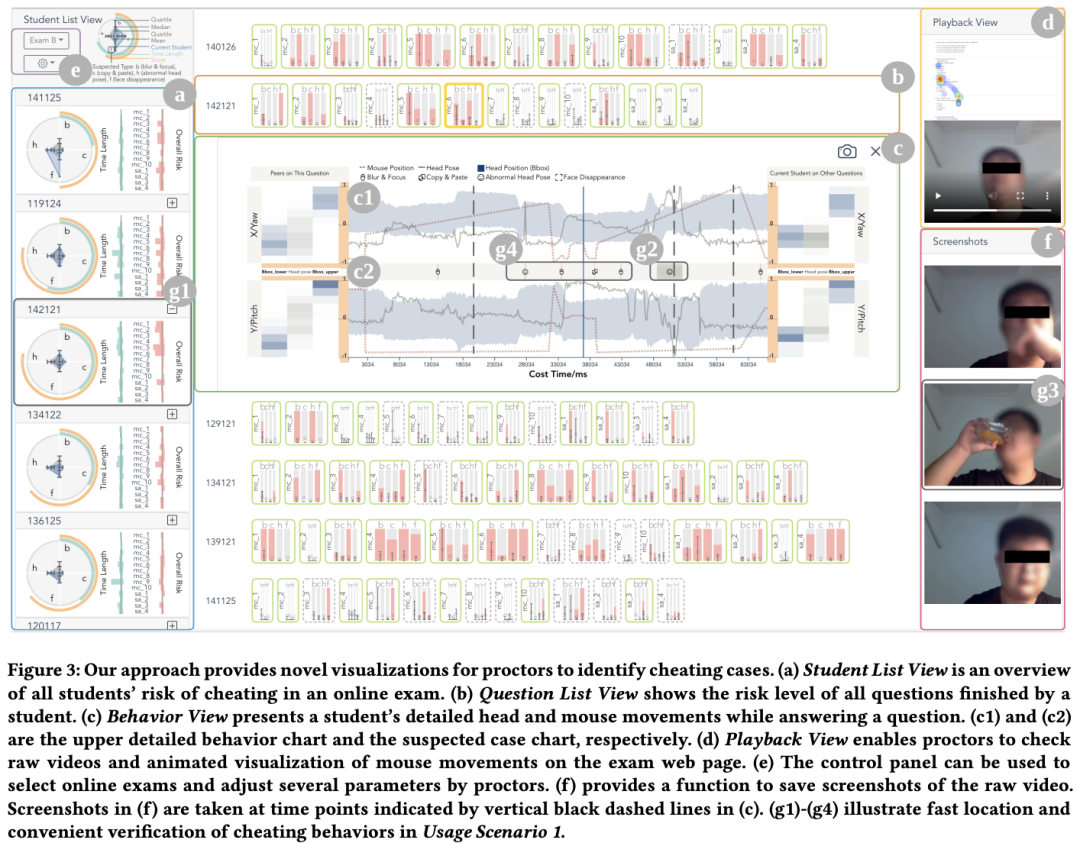
Professor Qu will discuss human-powered AI applications in supply-chain management, e-learning, healthcare, and other areas, explain visual analytics' role in different forms of AI explainability, and introduce visual analytics techniques developed for specific AI methods. See the English introduction below for details.
Title:
VIS+AI: A Visual Analytics Approach for Human-AI Collaboration
Brief Intro:
We live in the era of big data and AI. Data is everywhere and decision-making has become more and more data-driven. With tremendous amounts of data, massive computational power, and advances in machine learning algorithms, especially deep learning, AI has become very powerful and makes decisions for us every day. However, issues with model transparency and interpretability limit the adoption of AI in domains like healthcare, security, and finance. Explainable Artificial Intelligence (XAI) tries to make AI systems and their actions more understandable and transparent to humans. Visual analytics has been playing an important role in XAI. In this talk, I will introduce how visual analytics can help with different types of explainability (e.g., local vs. global explanation, white-box vs. black -box explanation) and the visual analytics techniques developed for specific AI techniques like Random Forest, CNN, RNN, LSTM, GNN, and Automated Machine Learning (AML). Case studies with human-powered AI in different application domains like supply chain management, E-learning, and health care will be presented. I will conclude the talk by discussing some emerging research topics for human-AI collaboration.
About Huamin Qu
Prof. Huamin Qu is a chair professor in the Department of Computer Science and Engineering (CSE) at the Hong Kong University of Science and Technology (HKUST) and is also the director of the interdisciplinary programs office (IPO) of HKUST. He obtained his PhD in Computer Science from Stony Brook University. He is the director of the VisLab at HKUST and serves as the coordinator of the Human-Computer Interaction (HCI) group. His main research interests are in visualization and human-computer interaction, with focuses on urban informatics, social network analysis, E-learning, text visualization, and explainable artificial intelligence (XAI). He has co-authored about 200 refereed papers and more than 80 papers are published in the IEEE Transactions on Visualization and Computer Graphics (TVCG) and ACM CHI. His research has been recognized by many awards including 14 best paper/honorable mention awards, AI 2000 Most Influential Scholar Award, IBM Faculty Award, and Distinguished Collaborator Award from Huawei Noah's Ark Lab. In 2020, Huamin was inducted into the IEEE VIS Visualization Academy which highlights the significant accomplishments of leaders in the data visualization field.